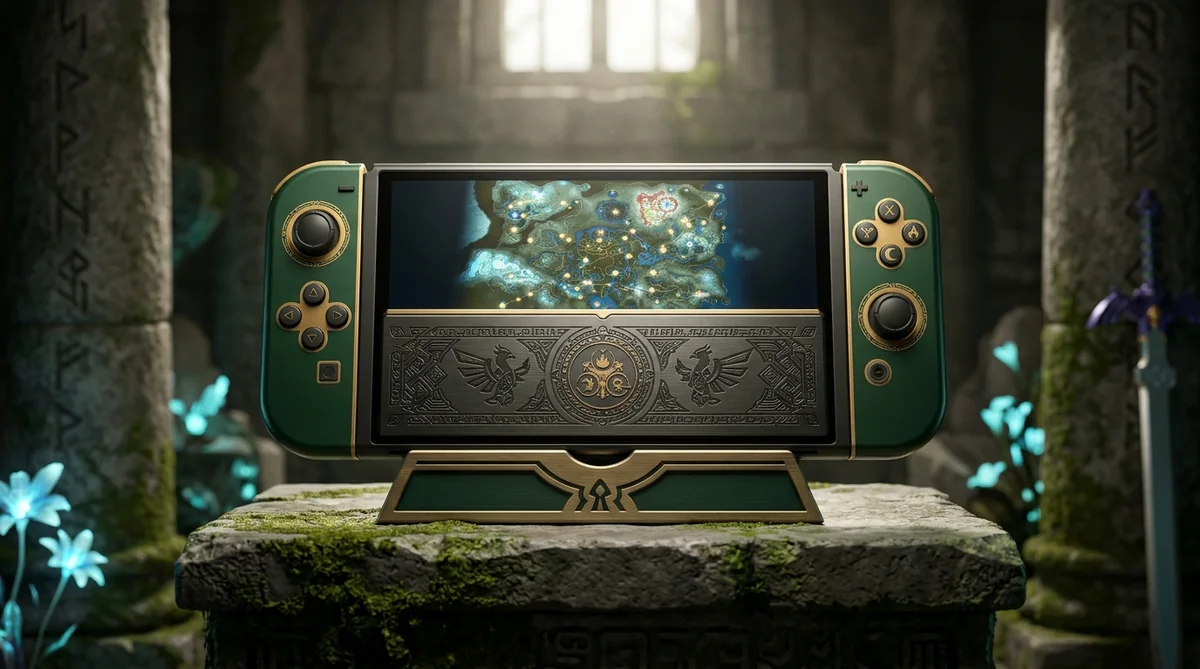
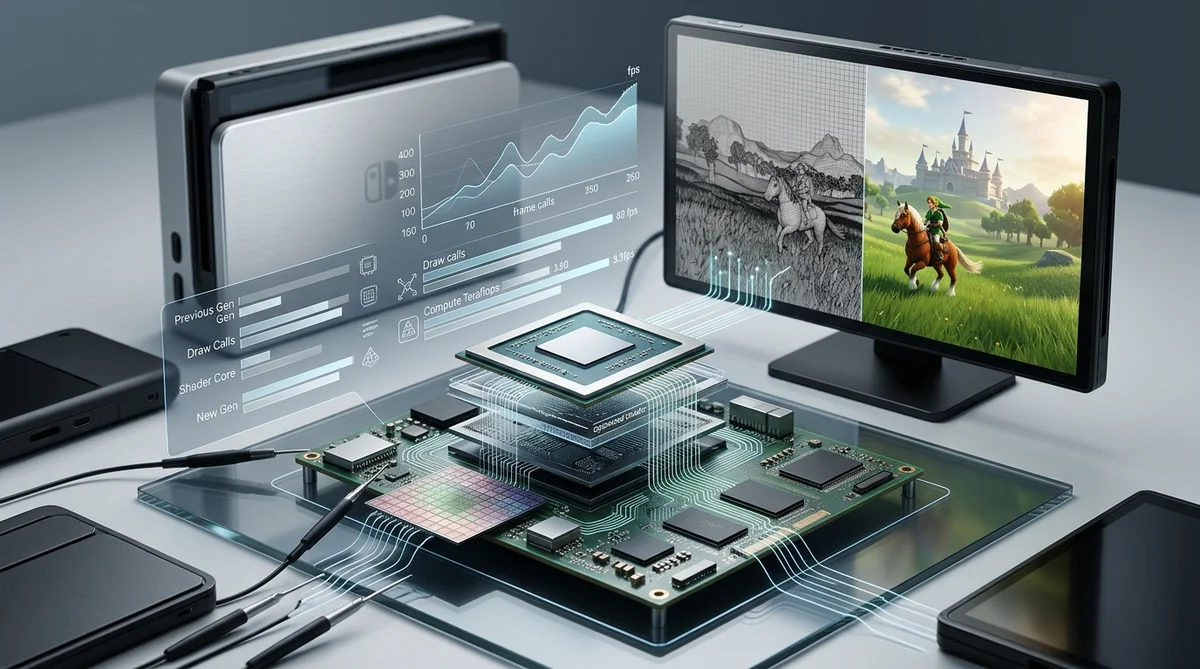
Zelda: Ocarina of Time Remake for Switch 2 — Why Nintendo EPD 3 Took Direct Control
Nintendo confirmed that EPD 3—the studio behind Breath of the Wild—is developing the Ocarina of Time remake for Switch 2. Here are the specs, tech...

Table of Contents
Not Grezzo, not Monolith Soft, and not an outsourced second-party studio. Nintendo broke its standard corporate silence with a major confirmation: the full-scale remake of The Legend of Zelda: Ocarina of Time for the Nintendo Switch 2 was developed from the ground up by Nintendo EPD Production Group No. 3—the flagship internal team behind Breath of the Wild and Tears of the Kingdom.
The reveal dropped via an official technical interview in Nintendo's Ask the Developer series, putting an end to months of industry rumors suggesting the project had been handed off to an external partner. Instead of farming out production to keep internal resources laser-focused on the next brand-new mainline entry, Kyoto’s top brass chose to take absolute, direct control of their 1998 masterpiece inside their own headquarters.
For anyone monitoring the engineering decisions coming out of Kyoto, this move changes the scope entirely. We are not looking at a superficial upscaled texture remaster or an exercise in easy nostalgia. This is a ground-up architectural rebuild designed to exploit the custom silicon and hardware pipeline of Nintendo’s next-gen hybrid console straight from the engine level.
The Turning Point: Nintendo EPD No. 3 Takes the Helm
For over fifteen years, Kyoto routinely assigned classic revivals and spin-offs to trusted partner studios with battle-tested technical credentials. Grezzo handled Ocarina of Time 3D in 2011, rebuilt Link's Awakening in 2019, and built Echoes of Wisdom in 2024. Meanwhile, Monolith Soft consistently served as the specialized auxiliary division for topographic modeling and vast terrain optimization.
This time, executive leadership broke that pattern. Keeping 100% of art direction, codebase architecture, physics simulation, and audio engineering inside EPD No. 3 signals that this release is a cornerstone of Nintendo’s multi-year hardware rollout.
| Technical Milestone | N64 Original (1998) | 3DS Remaster (2011) | Switch 2 Rebuild (2026) |
|---|---|---|---|
| Target Frame Rate | 20 FPS | 30 FPS | 60 FPS locked (VRR supported) |
| World Architecture | Segmented (Loading zones) | Segmented (Loading zones) | Seamless continuous 3D world |
| Storage Footprint | 32 MB cartridge | ~450 MB | ~27 GB high-density assets |
| Lead Developer | Nintendo EAD | Grezzo | Nintendo EPD Group No. 3 |
The announcement coincides with the 40th anniversary of The Legend of Zelda franchise (1986–2026), nearly three decades after the original title transformed game design by establishing 3D camera navigation and contextual Z-Targeting on the Nintendo 64. Numbers don't lie, but manufacturer marketing sure does. Here are the hard, verified facts: Nintendo’s top-tier internal team never spends years on an in-house project unless their objective is to set a new benchmark for their hardware.
The Training Ground: A Masterclass for the Next Generation of Zelda
Why assign your most valuable production team to rebuild a 28-year-old title instead of jumping straight into the next open-world project? Series producer Eiji Aonuma addressed this directly in reporting covered by LevelUp.
Aonuma structured this remake as a rigorous hands-on technical masterclass for Nintendo’s newer engineering and design cohort. The younger developers who joined during the original Switch era had worked exclusively on the non-linear Open Air formula. They lacked practical, shipping experience with tight spatial geometry, key-gated dungeon architecture, and the meticulous pacing that defined the golden age of 3D adventure design.
“This year marks the 40th anniversary of the first The Legend of Zelda game. With that in mind, I thought about what I should create as the series producer. Many of the team members working alongside me today have only experienced developing the most recent titles. That led me to ask: 'Do they truly understand how significant The Legend of Zelda: Ocarina of Time was to the entire franchise?'” — Eiji Aonuma, General Producer for The Legend of Zelda.
Breaking down the original release polygon by polygon forced the team to analyze the engineering logic behind every locked door, ocarina melody trigger, and sightline. Before you revolutionize future game systems, you have to master the spatial and mathematical foundations that built the medium.
Core Leadership: The Team Behind the Rebuild
The confirmed leadership structure proves this generational transition occurred under the direct guidance of seasoned Kyoto veterans:
- HokWai Ng (Game Director): Steps into the director chair after coordinating critical physics engine subsystems and object interaction dynamics in The Legend of Zelda: Tears of the Kingdom.
- Aya Shida (Art Director): Leads the visual overhaul, bringing her character design leadership from Breath of the Wild and deep rendering pipeline experience from Mario Kart 8 Deluxe.
- Hiroki Taguchi (Programming Director): Lead simulation engineer across the last two open-air mainline titles, specifically tasked with optimizing input latency and frame-time consistency.
- Masato Ohashi (Audio & Music Director): Veteran acoustic designer on Tears of the Kingdom and Animal Crossing: New Horizons, responsible for rearranging Koji Kondo’s score using modern acoustic instrumentation and dynamic spatial audio.
Supervised directly by Eiji Aonuma and Hidemaro Fujibayashi, this team avoided simply porting legacy N64 routines, opting instead to reconstruct the atmosphere using modern processing pipelines.
Engineering Specs: Stable 60 FPS, VRR, and Zero Load Times
Let’s strip away the marketing speak and look at the real hardware performance metrics. The 1998 original ran at a modest 20 FPS on N64 hardware. This Switch 2 rebuild targets and maintains a locked 60 FPS alongside modern display pipeline features.
A key hardware addition here is support for the HDMI Forum Variable Refresh Rate (VRR) specification. In plain English: the console actively syncs each rendered frame to your display's refresh cycle. If the GPU drops a frame under heavy load, the display waits instead of drawing a torn image. The result is zero screen tearing, smoothed-out micro-stutters, and no input lag penalty from traditional V-Sync buffers.
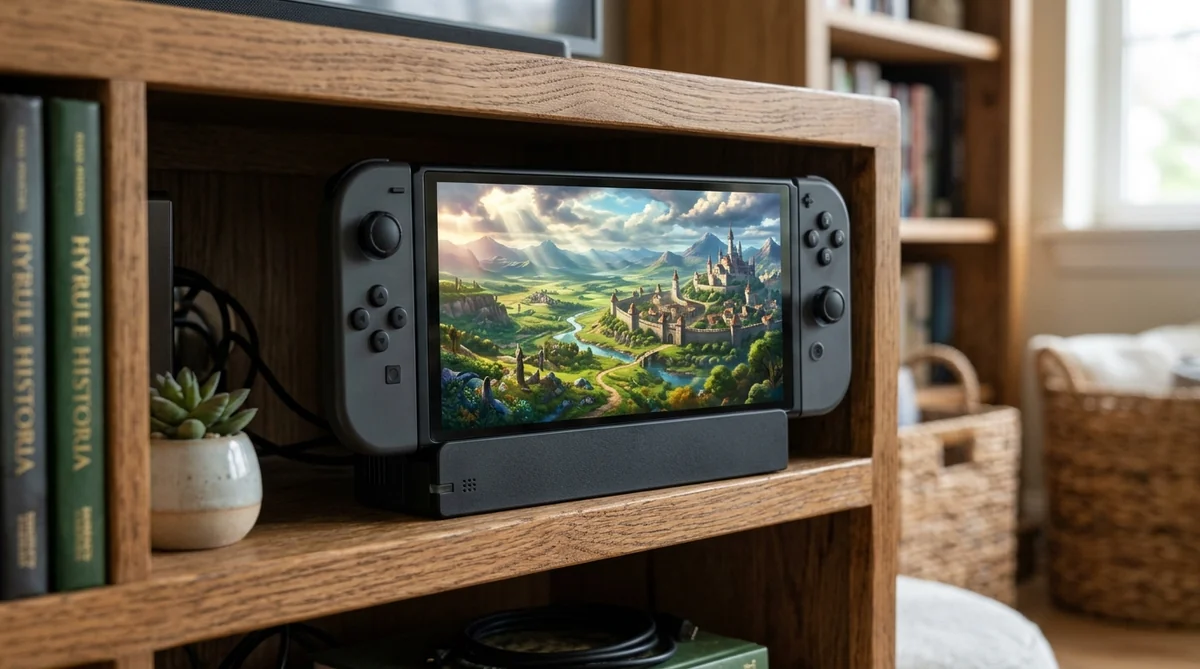
🎨 Conceptual reference illustration generated with AI. Does not represent the manufacturer's official design. 🎨 Reference concept render generated with AI. Does not represent the manufacturer's final hardware design.
The installation footprint sits at roughly 27 GB, significantly higher than the 18.2 GB required by Tears of the Kingdom. That increase is driven by high-resolution asset geometry, uncompressed spatial audio buffers, and hardware-accelerated volumetric lighting. Most importantly, the game strips out all legacy load boundaries: Hyrule Field, Market Town, and dungeon interiors now exist within a unified, streaming 3D space with zero loading screens between transitions.
Release Timing & Hardware Verdict
The official launch window targets November 5, 2026, releasing simultaneously on physical cartridges and digital download for the Nintendo Switch 2. The date positions the title as Nintendo's flagship technical showcase for the holiday sales cycle.
📌 Importante
Seamless streaming of high-polygon geometry and instant interior transitions require fast storage throughput. For digital owners, early technical benchmarks point to using storage media certified for the MicroSD Express standard to prevent asset streaming bottlenecks during fast traversal across Hyrule Field.
Before you pull out your credit card, here is my direct technical verdict: keeping this project within Nintendo EPD No. 3 is the strongest quality assurance signal Kyoto could provide. This isn't a quick cash-in on nostalgia; it is an engine-level showcase built to demonstrate what Nintendo's next platform can actually do when pushed by its best engineers.
Sources
- Ask the Developer Vol. 24: The Legend of Zelda: Ocarina of Time — Nintendo Official Site - Official technical interview transcript detailing internal development at Nintendo EPD No. 3 and engineering mentorship.
- LevelUp: Did Zelda: Ocarina of Time Need a Remake? Nintendo Explains the Decision - Coverage of Eiji Aonuma’s statements regarding in-house production methodology and team assignments.
Written by Axel Reyes
Tech & Hardware Editors
Personaje editorial y analista de Geekz News. Arquitecto de sistemas y entusiasta del hardware. Desmonta gadgets, evalúa benchmarks y traduce la jerga técnica a lenguaje que cualquier persona entiende. Axel no te dice qué comprar — te enseña a decidir por ti mismo con los datos correctos.
Thematic editorial persona backed by our human curation team.