AI Smart Glasses Beat Bulky Headsets: Why Practical Wearables Won
Mixed reality promised a digital revolution, but everyday users chose audio AI over heavy screens. Here is why lightweight smart frames crushed bulky...

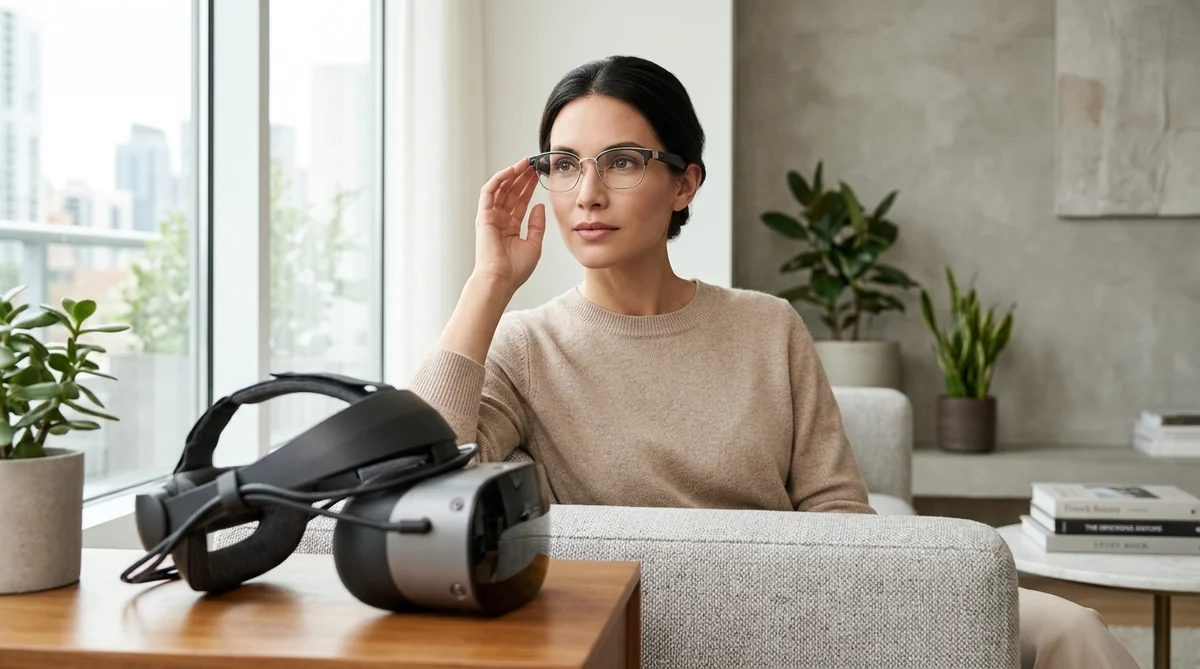
Table of Contents
When was the last time you saw someone stroll down the street or order a flat white with a one-pound visor strapped to their forehead? The honest answer is never. For years, silicon valley PR insisted that spatial computing would replace our desktops by 2026. Yet real-world adoption delivered its verdict: everyday users turned off the invasive screens and chose the voice of artificial intelligence models instead.
While bulky headsets gather dust on shelves due to painful nose-bridge pressure and dangling battery cords, ultralight, display-less frames have shattered sales records. Nobody wanted to isolate themselves from reality just to check a text message. The actual practical need was always a subtle assistant at your temples that answers queries on the fly without blocking your line of sight.
Ambient hardware won this round much faster than tech giants anticipated. The numbers don't lie, but manufacturer marketing does. Here are the verified hard facts. If you are weighing which device will genuinely upgrade your daily workflow, this turning point proves that lower physical weight and the absence of screens offer far better real-world utility.
The Consumer Shift That Shattered the Mixed Reality Promise
The tech industry tried to convince us that our next evolutionary step was sealing ourselves inside a digital bubble. Physical friction demolished that bet. Strapping on a 600-gram contraption to triage emails triggered widespread ergonomic rejection—the very real physical consequence of cheekbone indentations and neck strain after just 40 minutes of use.
That anatomical hurdle was compounded by an undeniable social roadblock. Wearing a digital scuba mask in an open-plan office or on the subway cuts off natural eye contact, throwing up an alienating barrier between you and everyone else. Conventional eyewear frames, by contrast, brought normalcy back to tech. They integrate discreet microphones and sensors into silhouettes that blend seamlessly into any meeting room.
Mass adoption did not rally behind synthetic virtual rooms; it rallied behind contextual help in the physical world. According to the IDC market study on smart glasses distribution and shipments, global demand for lightweight wearables grew steadily, fueled by traditional optical retail networks. Buyers want everyday accessories that handle quick tasks through microphones and ambient cameras—bypassing eye-straining floating interfaces entirely.
The Adoption Gap: Lightweight Frames vs. Clunky Helmets
Supply chain telemetry backs up what common sense suggested all along. The operational alliance between luxury optical brands and software giants moved over 7 million smart frames throughout 2025—tripling previous cumulative volumes and commanding an 85.2% slice of the audio-assisted wearable market.
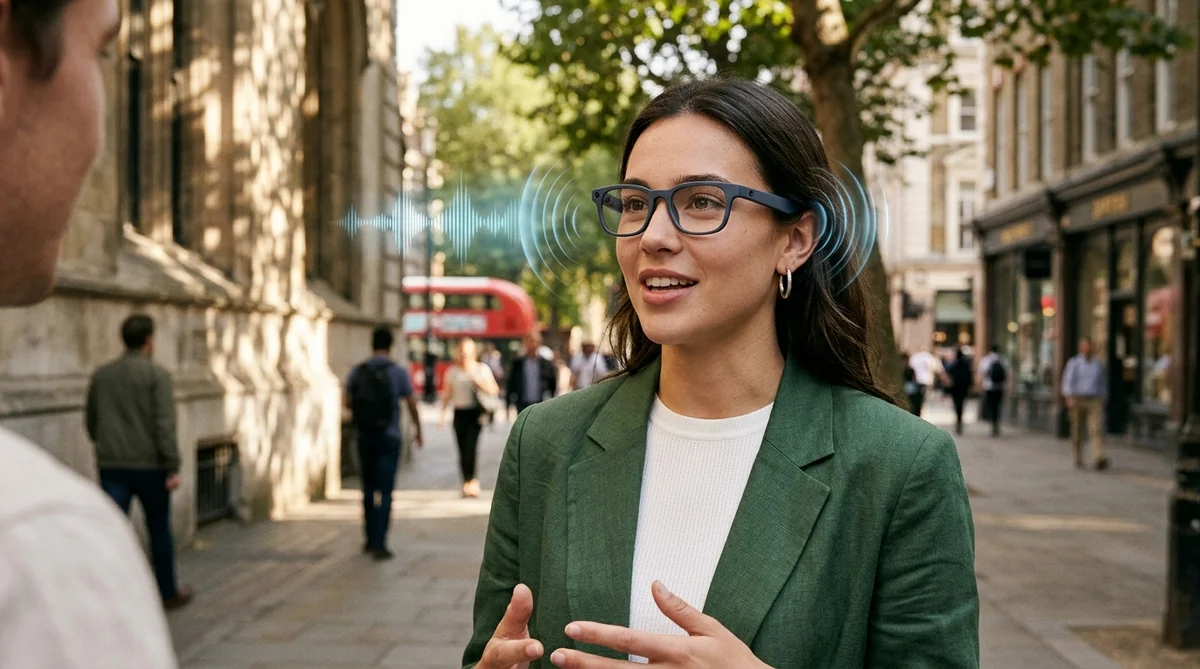
🎨 Reference conceptual illustration generated with AI. Does not reflect an official or final design from any manufacturer.
The decisive factor comes down to hardware architecture: 70.3% of buyers chose screenless frames (display-less), compared to a meager 14.3% who opted for lenses with built-in micro-projectors. Consumers voted with their wallets for rapid snapshot capture and open-ear audio, driving this form factor to a 167.4% year-over-year surge in early 2026, logging 2.25 million units shipped in a single quarter.
On the opposite end, heavy spatial visors hit a brick wall. Supply-chain tracking data from Counterpoint Research shows mixed reality visor shipments plummeted 22.3% year-over-year, while legacy virtual reality headsets dropped another 18%. Even flagship enterprise-grade visors saw drastic downward revisions, slashing production roadmaps from 800,000 units down to roughly 400,000 finished devices as sell-through slowed to an anemic 45,000 units per quarter.
Field Comparison: Everyday Wearability
| Specification & Usability Factor | Display-Free AI Smart Glasses | Spatial Mixed-Reality Visors |
|---|---|---|
| Average Facial Weight | ~45g to 55g (Featherweight) | 600g+ (Severe nose & cheek pressure) |
| Continuous Comfort Window | 12+ hours (All-day wear) | 30 to 45 minutes (Neck strain threshold) |
| Power Delivery & Runtime | Pocket charging case / Full-day battery | Dangling tethered battery pack / ~2 hours |
| Social Friction Index | Near zero (Indistinguishable from normal frames) | High (Isolating, uncanny digital eye projections) |
| Primary Input Method | Contextual voice & ambient microphones | Mid-air hand pinching ('Gorilla Arm' fatigue) |
| Hardware Investment Tier | Accessible Tier ($$) | Ultra-Premium Enthusiast Tier ($$$$) |
The most sophisticated technology on Earth fails the moment it demands changes to natural human posture. Users opted for persistent auditory assistance over total visual confinement.
Everyday Ergonomics vs. Facial Isolation
Strip away the flashy keynote presentations and look at an ordinary workday. The decisive win of slim frames over facial visors comes down to friction-free usability. Nobody wants to manage hanging cables or haul around a carrying case the size of a bowling ball just to run an errand.
- ✅ Featherweight footprint and pocket charging: Slim frames hover around 50 grams on average, recharge right inside their pocketable carrying case, and easily clear a full workday. ❌ Spatial visors hang over 600 grams directly across your nasal bridge, anchored by tethered 350-gram battery bricks that turn your jeans pocket into a space heater and quit after two hours.
- ✅ Zero-distraction voice interaction: Querying real-time language translations or setting location-based reminders via integrated beamforming microphones takes three seconds without pulling your focus. ❌ Closed helmets force you into mid-air hand-tracking gestures that exhaust your shoulder muscles within minutes (gorilla arm fatigue) while dragging you through unnecessary floating menus.
- ✅ Seamless social presence: A classic frame looks completely natural across from a coworker or sitting at a coffee shop. ❌ External video passthrough tries to project synthetic, rendered eyes onto an outward-facing OLED panel—a bizarre aesthetic that creeps out bystanders and halts casual conversations in their tracks.
Ambient Hardware and the Market's Next Move
Consumer technology does not evolve by corporate decree; it evolves through daily utility. For half a decade, marketing campaigns insisted we needed high-density transparent displays directly in front of our pupils around the clock. Field testing proved the exact opposite: the best interface is the one that never blocks what you are looking at.
Semiconductor fabrication plants have already shifted their production pipelines. Next-generation wearable silicon is no longer prioritizing power-hungry micro-displays designed to trick human vision. Instead, silicon designers are channeling transistor budgets into ultra-efficient neural processing units engineered to analyze acoustic environments, identify objects via micro-sensors, and feed immediate, actionable audio straight to your ears.
📌 Importante
Software roadmaps through 2027 prioritize silent, contextual voice agents running background tasks, leaving behind the floating window clutter that visually drains the user.
The buying takeaway here is unambiguous: you don't need the latest, most expensive gear on the shelf—you need what works for YOU. Sinking a top-tier budget into a heavy helmet just to read Slack messages makes zero sense when a lightweight, discreet frame delivers the exact data you need while keeping your head firmly in the real world.
Sources
- IDC: Smart Glasses Growth Cools to 35% as Meta Doubles Down on Distribution — Market share audit, global smart glasses shipments, and sector projections (2026–2028).
- Essilorluxottica: Financial Press Releases — Technical documentation, frame manufacturing data, and distribution metrics.
- Companieshistory: Augmented Reality Market — Historical AR market trajectory, hardware adoption, and vendor shifts.
- Xpert: The Global Vr Headset Market — Global VR/MR headset hardware tracking and shipment trends.
- Reddit: Apple Slashes Vision Pro Production As Sales Fall — Supply-chain assembly adjustments and consumer sell-through reports.
Written by Axel Reyes
Tech & Hardware Editors
Personaje editorial de Geekz. Prueba gadgets y tecnología cotidiana para ahorrarte compras inútiles, dinero y dolores de cabeza.
Thematic editorial persona backed by our human curation team.