Local AI Laptops: Nvidia and MediaTek Challenge Qualcomm's Windows on ARM Reign
Nvidia and MediaTek team up on RTX Spark silicon, pairing 3nm ARM efficiency with Blackwell GPU power to challenge Qualcomm's Snapdragon X Elite. Here is...


Table of Contents
For months, big tech repeated a half-truth: if you wanted serious artificial intelligence, you either had to rent cloud server time or settle for lightweight laptop chips that barely managed to blur your webcam background. Qualcomm dominated that Windows on ARM playing field with zero competition in sight—until now.
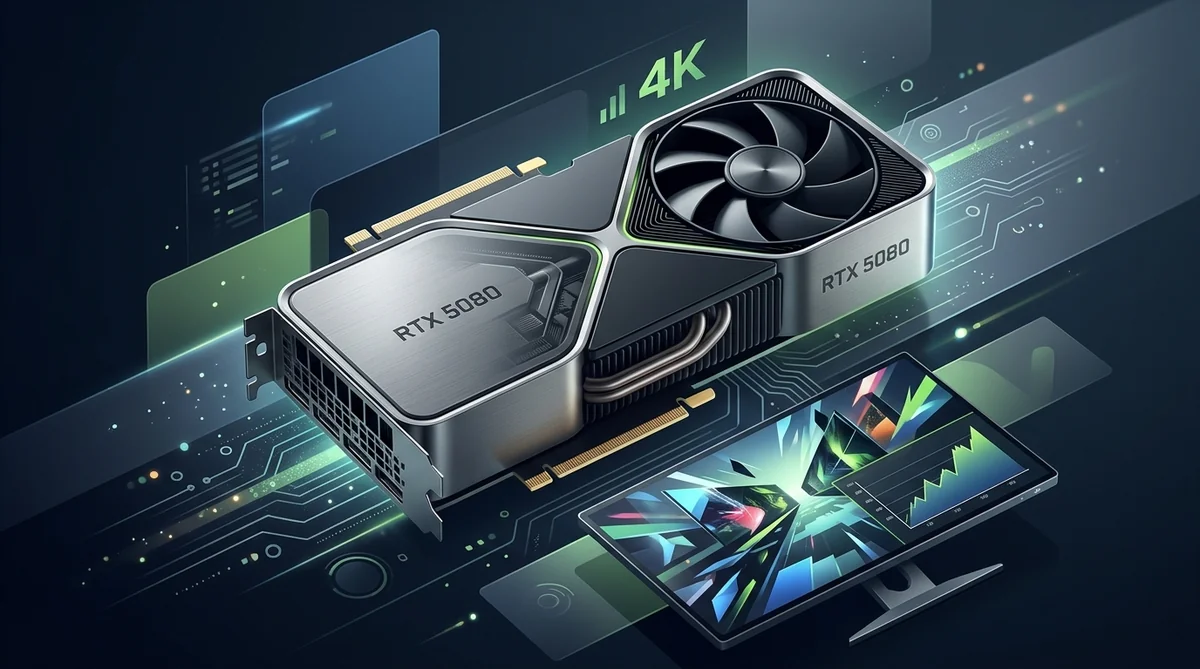
Nvidia and MediaTek just rattled the entire PC ecosystem by unveiling their new hybrid silicon platform: RTX Spark—internally tracked under the N1X and GB10 dies. This architecture marries high-efficiency mobile CPU cores with the graphical muscle of Nvidia's Blackwell generation, bringing advanced local language models directly to your ultrabook without sticking you with monthly cloud subscription bills.
The numbers don't lie, but manufacturer marketing does. Here are the verified hard facts: this alliance isn't just targeting the Snapdragon X Elite in the premium tier; it completely rewrites what it means to run heavy data workloads locally on a thin-and-light laptop without nuking your battery in under two hours.
The Windows on ARM Pivot: Breaking the Monopoly
Microsoft's exclusive silicon partnership with Qualcomm locked the Windows on ARM ecosystem into a walled garden for nearly a decade. That contractual exclusivity finally ran out, opening the floodgates to fierce competition where everyday buyers actually win.
Nvidia saw the writing on the wall: building top-tier desktop graphics cards won't keep you relevant if the laptop market transitions entirely toward high-efficiency system-on-chip (SoC) designs. By teaming up with MediaTek, Team Green solved its oldest engineering headache: crafting a full chip that sips power when you're just typing up documents, but unchains massive graphics horsepower the moment you compile code or render 4K video.
"The future of personal computing isn't pinging every command to a distant server farm. It's running autonomous agents at zero latency directly on your own silicon," company spokespeople emphasized during the rollout.
As laid out in the official NVIDIA RTX Spark announcement for Windows laptops, this marks a clean slate for Microsoft's operating system. Local AI inference moves past gimmick status into an everyday workhorse tool.
💡 Consejo Pro
Windows on ARM now includes native support for Nvidia's CUDA development platform, letting developers spin up machine learning acceleration libraries without eating the heavy performance penalties of translation layers.

Silicon Forensics: 3nm Lithography and PetaFLOP Muscle
To grasp why this architecture matters, look beneath the vapor chamber. The N1X / GB10 platform is etched on TSMC's 3nm fabrication node, utilizing a 2-chiplet layout bridged by Nvidia's ultra-fast NVLink-C2C interconnect.
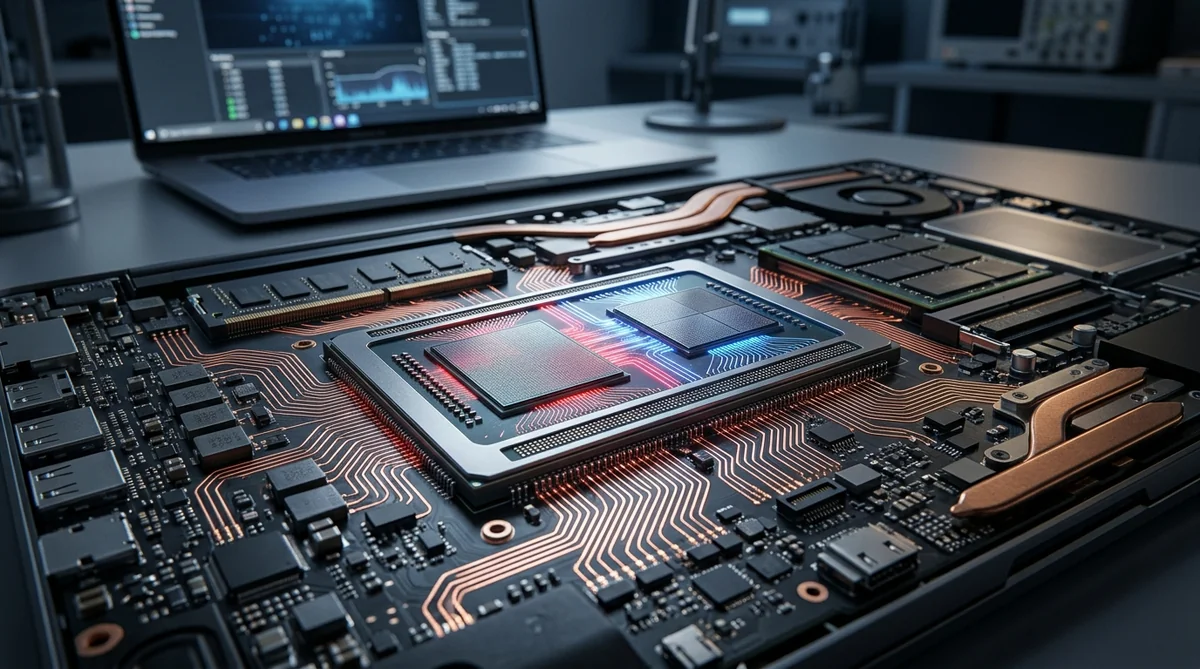
🎨 Conceptual AI-generated rendering for illustrative reference. Does not represent the manufacturer's final production layout.
That physical bridge enables the host processor and graphics engine to swap data almost instantaneously. The main compute block houses 20 CPU cores: 10 high-performance Cortex-X925 cores paired with 10 high-efficiency cores dialed in by MediaTek's engineering labs.
On the graphics side, you get a dedicated Blackwell array packing 6,144 CUDA cores alongside 5th-generation Tensor cores optimized for FP4 precision math. In plain English? The chip peaks at 1 PetaFLOP of compute, meaning it can chew through open-weights large language models up to 120 billion parameters (120B) right on your machine without choking your desktop interface.
Full architectural breakdowns are detailed in the MediaTek silicon deep dive on autonomous AI agents, focusing on how dual-die thermal management prevents the severe thermal throttling that plagues slim chassis. Hardware enthusiasts have echoed these findings across community analyses on TechPowerUp's RTX Spark platform breakdown.
RTX Spark vs. Snapdragon X Elite: Different Philosophies
This matchup isn't just about comparing clock speeds on a synthetic benchmark chart; it is a fundamental clash in design philosophies.
Qualcomm engineered the Snapdragon X Elite around a modest 45 TOPS integrated Neural Processing Unit (NPU) tailored for light Copilot+ office utilities. Nvidia and MediaTek took the brute-force route, pairing raw GPU compute with up to 128 GB of unified LPDDR5X memory running on a 300 GB/s bus.
| Feature | Qualcomm Snapdragon X Elite | Nvidia-MediaTek RTX Spark |
|---|---|---|
| Core Philosophy | Ultra-efficient office tasks & NPU-focused | Heavy local inference & workstation graphics |
| Primary AI Engine | 45 TOPS Hexagon NPU | Blackwell Tensor Cores (1 PetaFLOP FP4) |
| GPU Capability | Casual gaming / standard display output | Full DLSS stack, heavy 3D rendering & modern gaming |
| Unified Memory | Up to 64 GB standard LPDDR5X | Up to 128 GB unified LPDDR5X (300 GB/s bandwidth) |
| Cooling Demands | Low wattage, silent or passive chassis | Robust active cooling required under full load |
| Cost Tier | Entry-to-mid premium ($$) | High-end workstation tier ($$$) |
Snapdragon remains a champion for road warriors who care about 15-hour battery life while writing, browsing, and jumping on video calls. But for local data modeling, software engineering, and running autonomous software agents, the Nvidia-MediaTek platform is playing an entirely different sport.
The $3.5B Bet Behind the Taiwanese Alliance
This silicon didn't appear out of nowhere, nor is it a simple co-branding exercise. As tracked in the TechNewsWorld industry analysis on MediaTek's AI expansion, Nvidia committed $3.5 billion to deepen engineering joint ventures with MediaTek across data centers, automotive computing, and commercial laptops.
MediaTek is no lightweight. Their silicon powers over 2 billion connected devices globally each year, generating record revenues north of $19.1 billion in their latest fiscal reporting.
This partnership gives Nvidia the precise capabilities it lacked: proven packaging expertise, world-class 5G/Wi-Fi wireless integration, and ultra-efficient mobile power controllers—the exact low-level engineering required to stop a high-powered workstation laptop from turning into a frying pan on your lap.
OEM Rollout and Market Availability
RTX Spark won't remain a show-floor concept. The world's top PC manufacturers have confirmed dedicated product lines built around this architecture:
- ASUS: Integrating the silicon into ultra-thin Zenbook lines paired with high-refresh OLED displays.
- Dell: Rolling out executive-class XPS models tuned for heavy productivity.
- HP: Launching mobile workstation variants designed for on-the-go video and 3D creators.
- Lenovo: Deploying business-ready ThinkPad units with full enterprise IT management certifications.
- Microsoft: Testing next-gen Surface hardware targeting software developers.
- MSI: Shipping slim performance laptops optimized for design workflows and high-framerate gaming.
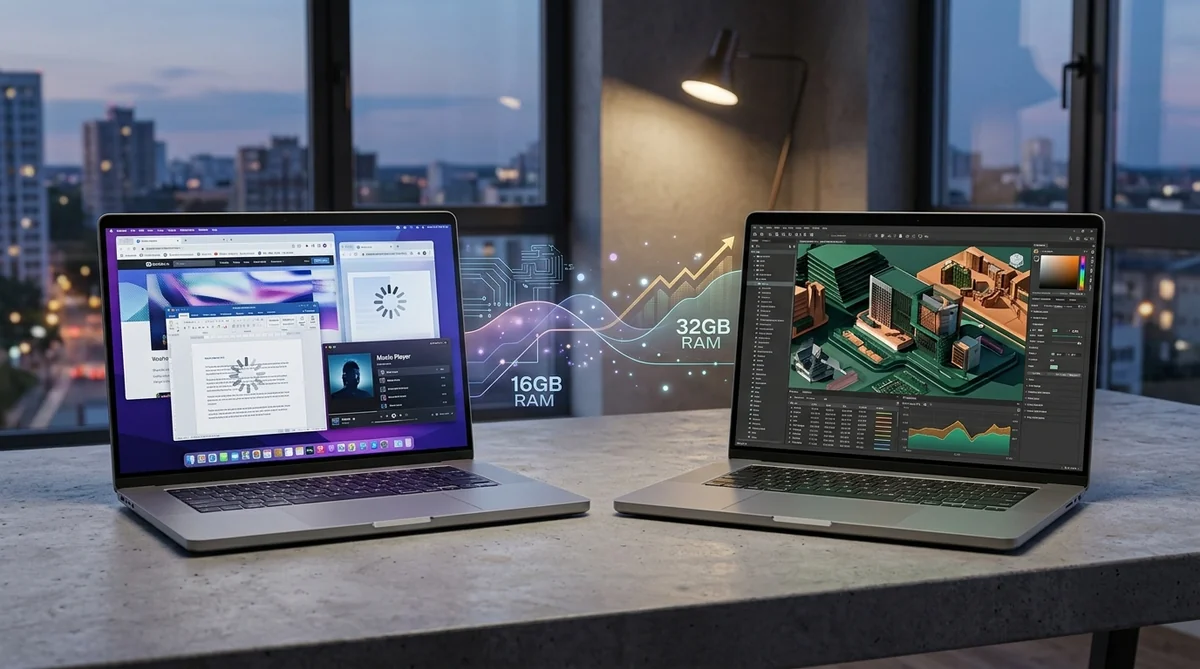
Retail configurations will start at 32 GB of unified memory, scaling up to 128 GB configurations on flagship trims. That unified pool completely removes the out-of-memory bottlenecks that have long crippled local machine learning tasks on mobile workstations.
Axel's Verdict: Should You Buy In or Wait?
Whenever groundbreaking silicon hits the market, the only question that matters is: Should you spend your hard-earned cash on this right now, or hold off?
If your day-to-day workflow consists of Google Docs, juggling browser tabs, and everyday Slack messaging, stop right there. Snapdragon laptops or standard x86 ultrabooks handle those demands effortlessly for significantly less money. Paying for PetaFLOP compute to crunch basic spreadsheets is wasted cash.
However, if you are a programmer, data scientist, video editor, or developer sick of burning money on monthly cloud GPU instances just to test local builds, this chip delivers a measurable quality-of-life leap.
📌 Importante
If you need local machine learning power on the go, wait for independent thermal testing before dropping top dollar on flagship configurations. Real-world chassis cooling will make or break how much performance these chips sustain over long rendering runs.
You don't need the latest shiny thing. You need what works for YOU. The monopoly on Windows mobile computing is broken—now take a hard look at your actual daily workload and let the benchmarks guide your wallet.
Sources
- NVIDIA Newsroom: NVIDIA RTX Spark PCs Available Today — Official press briefing detailing the commercial rollout of the hybrid Windows computing platform.
- MediaTek Tek Talk Blog: NVIDIA RTX Spark PCs Are Here — In-depth silicon design breakdown covering ARM core allocations and agentic acceleration.
- TechNewsWorld: Is MediaTek Ready for Its AI Breakout? — Industrial market report evaluating semiconductor capital investments and OEM adoption.
- TechPowerUp: NVIDIA Announces RTX Spark Platform Details — Architecture teardown and technical discussion on CUDA core clusters and FP4 precision pipelines.
Written by Axel Reyes
Tech & Hardware Editors
Personaje editorial de Geekz. Prueba gadgets y tecnología cotidiana para ahorrarte compras inútiles, dinero y dolores de cabeza.
Thematic editorial persona backed by our human curation team.